
English| EUR
Suggested for you
More currencies
Choose a language
Charleston Harbor is home to a resident population of Atlantic bottlenose dolphins. Visitors often wonder whether they can swim alongside these marine mammals during their harbor visit. Federal and state regulations strictly govern all interactions with wild dolphins in South Carolina waters.
Quick answer
Swimming with dolphins in Charleston Harbor is prohibited under the Marine Mammal Protection Act, which makes it illegal to pursue, harass, or attempt to interact with wild dolphins in U.S. waters. Violations carry fines up to $11,000 and potential criminal charges. Boat-based observation tours operate legally by maintaining the required 50-yard distance from all marine mammals.
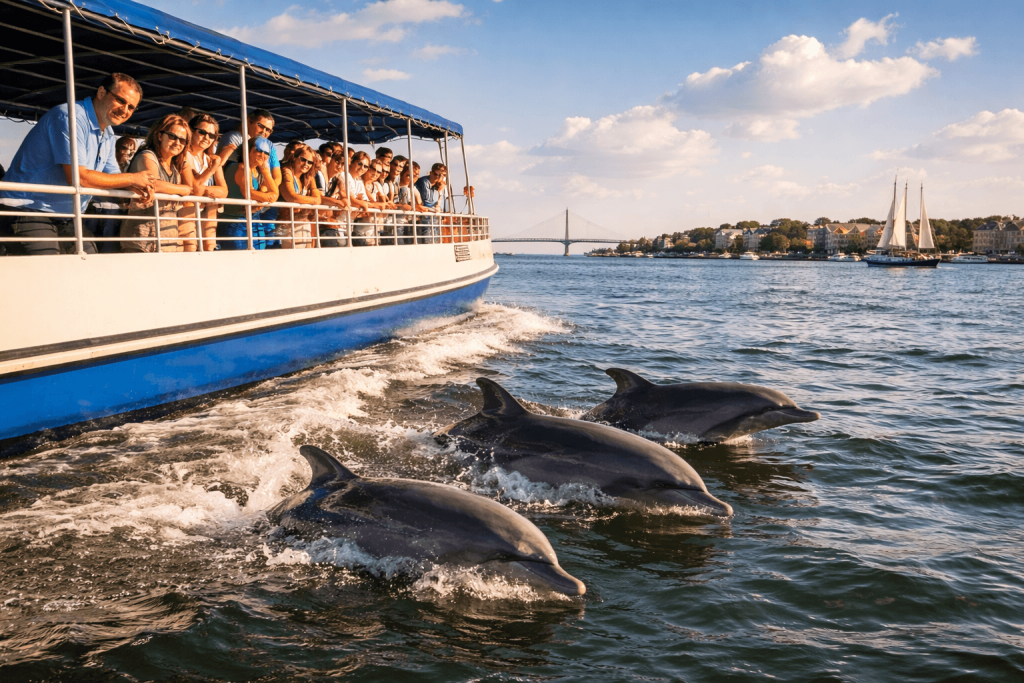
Atlantic bottlenose dolphins inhabit Charleston Harbor year-round, with peak activity concentrated in the tidal creeks and estuaries between Shem Creek and the Ashley River. The population consists of approximately 200 resident individuals that feed on spot, mullet, and juvenile shrimp in the shallow marsh systems. Federal law prohibits any attempt to swim with, touch, or feed wild dolphins in Charleston waters. The Marine Mammal Protection Act categorizes all harassment—including pursuit by swimmers, kayakers, or vessels—as a federal offense. South Carolina Department of Natural Resources enforces these regulations within state waters, coordinating with NOAA Fisheries for cases involving repeated disturbance or injury to protected species. The 50-yard approach threshold applies to all watercraft, paddlers, and individuals in the water. Legitimate dolphin encounters in Charleston occur aboard permitted observation vessels that operate under strict wildlife-viewing protocols. Captains trained in marine mammal behavior position boats at legal distances while dolphins surface, feed, and occasionally bow-ride in the vessel's wake. Morning departures align with tidal patterns that concentrate baitfish near creek mouths, increasing the likelihood of prolonged sightings. Observers consistently report encounters lasting 15 to 40 minutes as pods move through feeding zones. The prohibition on swimming stems from documented risks to both humans and dolphins. Close-range interactions disrupt feeding behavior, separate mothers from calves, and condition animals to associate humans with food—a pattern that increases vessel strikes and entanglement injuries. Enforcement activity in Charleston Harbor has intensified since 2021 following multiple incidents involving jet skis and paddleboards pursuing dolphin pods in confined creek channels.
“Federal law prohibits any attempt to swim with, touch, or feed wild dolphins in Charleston waters.”
Many visitors arrive in Charleston hoping to swim with wild dolphins, unaware of the strict federal regulations protecting these marine mammals. Misconceptions persist because travelers often confuse local ecotourism with captive-animal programs found in other destinations.
MythYou can legally swim with wild dolphins in Charleston Harbor if they approach.
FactThe Marine Mammal Protection Act prohibits swimming with, touching, or harassing wild dolphins, even if they initiate contact. Observers must maintain a distance of at least 50 yards.
MythCharleston has marine parks that offer captive dolphin swim experiences.
FactSouth Carolina state law bans keeping dolphins in captivity for commercial shows or swim-with programs. No captive dolphin facilities exist anywhere in the state.
MythFeeding wild dolphins is a harmless way to get them to swim closer.
FactFeeding wild dolphins is illegal under federal law and disrupts their natural hunting patterns. Violations carry steep fines and endanger the animals by increasing boat strike risks.
Although swimming with dolphins is not permitted in the harbor, the early morning arrival window from 07:00–10:00 offers the best viewing opportunities. These hours feature calmer waters and higher dolphin activity compared to later in the day.
Mild, temperatures averaging 71°F to 84°F
Coastal waters warm up, prompting local pods to travel closer to the harbor. Clear mornings provide excellent visibility for boat-based viewing.
Hot and humid, highs around 90°F
Dolphins remain highly active, though midday heat can cause them to seek deeper waters. Early morning excursions are critical to avoid midday humidity and afternoon thunderstorms.
Pleasant, temperatures averaging 75°F to 83°F
Water temperatures begin cooling, and dolphins feed heavily to prepare for winter. Slower harbor traffic reduces background noise, often keeping marine mammals close to shore.
—
Arriving on weekdays between 07:00–10:00 ensures fewer recreational boats on the water. Dolphins are less disturbed by engine noise, leading to more natural surface behaviors.
Verdict: For optimal viewing, target a Tuesday to Thursday arrival between 07:00–10:00 in April or October.
Entry costs for viewing dolphins in Charleston Harbor depend on whether you watch from the public shoreline or take a boat. While public viewing points along the water require no admission fees, choosing a private charter introduces commercial costs.
Verdict: A typical visitor pays 0 USD to view dolphins from the shoreline, but booking a private boat tour is the primary factor that increases this expense.
Charleston Harbor sits at the confluence of the Ashley and Cooper rivers, bordering the downtown peninsula and Mount Pleasant. Travelers can access the waterfront observation points via free local shuttle lines, passenger ferries, or primary highways.
CARTA DASH Route 213 to Waterfront Park
US-17 South to Concord Street garages
Charleston Water Taxi from Patriots Point to Waterfront Park
To maximize your chances of spotting wildlife from the shoreline, target the 07:00–10:00 window when morning waters are calm. Parking is available at the Aquarium parking garage, which avoids the limited metered spaces along Concord Street.
Federal law requires all vessels and swimmers to maintain at least 50 yards from dolphins in Charleston Harbor. These guidelines protect both marine mammals and ensure safe, legal wildlife observation.
Everything you need to know about can you swim with dolphins in charleston sc
No, it is illegal to swim with, touch, or feed wild dolphins in Charleston SC. Federal law prohibits any interaction that could harass or alter the natural behavior of these marine mammals.
No, reputable tour operators do not allow swimming with dolphins in Charleston SC. They focus on ethical observation from a respectful distance to ensure the safety of both guests and wildlife.
The Marine Mammal Protection Act of 1972 makes it illegal to approach, interact with, or disturb wild dolphins. This federal regulation is strictly enforced in Charleston Harbor to protect the local population of Atlantic bottlenose dolphins.
You must maintain a distance of at least 50 yards (150 feet) from dolphins at all times. This distance is roughly equivalent to half a football field and helps prevent harassment of the animals.
Yes, there are many educational boat tours that offer responsible observation of Charleston landmarks and coastal wildlife. These eco-tours allow you to enjoy the presence of bottlenose dolphins without interfering with their natural habitat.
Attempting to swim with wild dolphins can lead to significant legal penalties, including heavy fines and potential imprisonment. Furthermore, such actions stress the animals and can disrupt essential behaviors like feeding, nursing, or resting.